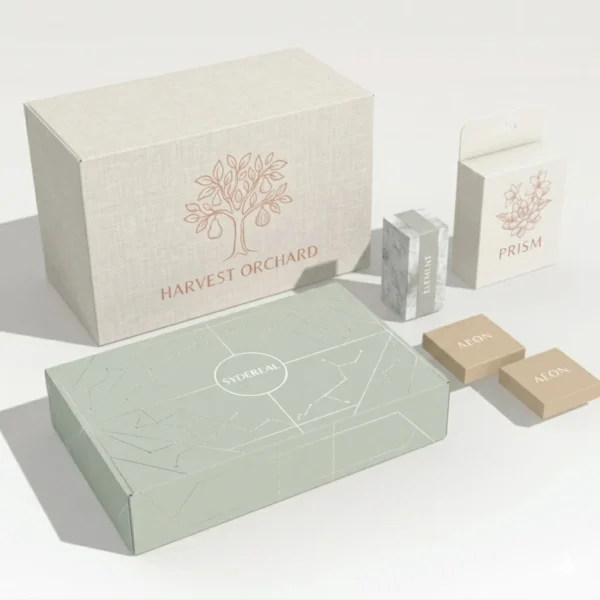
When it comes to custom packaging, the box you choose does much more than just hold your product. It protects your merchandise, serves as a mobile billboard for your brand, and dictates a significant portion of your shipping and warehousing costs. Yet, when most business owners start designing their packaging, they are immediately hit with industry jargon that can be confusing.
Perhaps the most common question we hear from brands transitioning to professional packaging is: “What is the difference between E-flute and B-flute, and which one do I need?”
Understanding the architecture of your packaging is the secret to reducing shipping costs, minimizing product damage, and delivering a premium unboxing experience. In this comprehensive guide, we are going deep into the world of corrugated packaging. We will break down the exact differences between E-flute and B-flute, explore the broader spectrum of corrugated options, and provide industry-specific recommendations for sizing, weight limits, and box styles.
In corrugated packaging, the flute is the wavy, arched layer of paper sandwiched between the two flat outer layers (the liners) of a piece of cardboard.
If you look at the edge of a standard shipping box, the flute is the “zig-zag” or “S-shaped” pattern you see in the middle.
Why is the Flute Important in Corrugated Packaging?
The flute acts as the structural foundation of the box. Think of it like the arches used in bridges or historical architecture—the shape is naturally designed to support a massive amount of weight and resist pressure.
Specifically, the fluting provides three main benefits:
Crush Resistance (Stacking Strength): It prevents the box from collapsing when heavy items are stacked on top of it in a warehouse or delivery truck.
Cushioning: The empty space (air pockets) between the waves acts as a shock absorber, protecting the products inside from drops and impacts during transit.
Insulation: The trapped air also helps protect products from sudden temperature changes.
The Anatomy of Corrugated Packaging
Before diving into specific flute types, it is essential to understand what makes a piece of cardboard “corrugated.” A standard sheet of corrugated board is made up of three primary layers of kraft paper:
The Outer Liner: The flat piece of paper on the outside of the box. This is your canvas for high-quality digital or offset printing.
The Inner Liner: The flat piece of paper on the inside of the box.
The Fluting (Medium): The wavy, arched paper sandwiched between the two liners.
The fluting is the magic of corrugated packaging. By mimicking the architectural strength of an arch, fluting provides remarkable rigidity, crush resistance, and structural integrity while keeping the material incredibly lightweight. The size, thickness, and density of these arches are what determine the “flute” category.
Different flute sizes change the thickness of the box walls, the amount of cushioning provided, and how smooth the outer liner is for printing.
The Flute Showdown: E-Flute vs. B-Flute
The vast majority of custom mailer boxes, retail displays, and e-commerce packaging utilize either E-flute or B-flute. While they may look similar to the untrained eye, their structural differences make them suited for entirely different applications.
What is B-Flute?
B-flute is the robust workhorse of the packaging world. It features thicker, taller arches and is generally considered the standard for transit packaging that requires moderate crush resistance and stacking strength.
Thickness: Approximately 1/8 inch (3.2 mm).
Flutes per Linear Foot: Roughly 47 flutes.
The Strengths: B-flute offers excellent puncture resistance and top-to-bottom compression strength. Because the flutes are taller, there is more air trapped inside the board, which provides superior cushioning for the products inside.
The Drawbacks: Because the flutes are wider apart, the outer liner spans a larger gap between each arch. When printed on, especially with heavy ink coverage or glossy finishes, this can sometimes cause a “flute shadow” or “washboard effect”—faint vertical lines where the fluting sits underneath the liner.
Best Use Cases for B-Flute:
B-flute is ideal for heavier items that are not being shipped inside another master carton. It is highly recommended for:
Food & Beverage: Canned goods, heavy glass jars, or beverage multipacks.
Heavy E-commerce: Small appliances, hardware, or dense products weighing between 15 to 30 lbs.
Point of Purchase (POP) Displays: The thickness provides the structural integrity needed for freestanding retail displays.
What is E-Flute?
E-flute is the darling of modern direct-to-consumer (D2C) e-commerce. It is significantly thinner than B-flute but features a much higher density of arches.
Thickness: Approximately 1/16 inch (1.6 mm).
Flutes per Linear Foot: Roughly 90 flutes.
The Strengths: E-flute provides a superior, ultra-smooth surface for high-resolution printing. Because the flutes are tightly packed, there is virtually no washboard effect, making it the premier choice for complex graphics, vibrant colors, and premium finishes. Furthermore, its slim profile reduces the overall volume of the box, saving significant space in warehouses and lowering shipping costs.
The Drawbacks: It has lower puncture resistance and less cushioning than B-flute. It is not meant for heavy, dense industrial items.
Best Use Cases for E-Flute:
E-flute is the standard for custom printed mailer boxes and premium retail packaging. It is highly recommended for:
Cosmetics & Skincare: Creams, lotions, and beauty kits that require high-end branding.
Apparel & Fashion: Clothing, shoes, and accessories.
Subscription Boxes: The perfect balance of structural integrity for shipping and aesthetic appeal for the unboxing experience.
Consumer Electronics: Lightweight gadgets, phone accessories, and tech wearables.
Quick Comparison Table: E-Flute vs. B-Flute
Feature
E-Flute
B-Flute
Thickness
~1/16″ (1.6mm)
~1/8″ (3.2mm)
Print Quality
Exceptional (Smooth surface)
Good (Slight washboard effect possible)
Storage Space
Highly efficient (Takes up 50% less space)
Requires more warehouse space
Cushioning
Low to Moderate
High
Ideal Product Weight
Up to 10-15 lbs
Up to 20-30 lbs
Beyond B and E: The Full Spectrum of Corrugated Flutes
While E and B flutes dominate custom e-commerce packaging, your supply chain might require different structural specifications depending on the product journey.
C-Flute: The Shipping Standard
If you have ever received a standard brown shipping box from a major online retailer, it was likely a C-flute box.
Thickness: 3/16 inch (4.0 mm).
Use Case: C-flute is the most common corrugated material in the world, accounting for over 80% of all corrugated containers. It offers excellent stacking strength and crush resistance. It is used almost exclusively for heavy shipper boxes (Regular Slotted Containers) rather than high-end retail display packaging due to its poor printability.
F-Flute (Micro-Flute): The Premium Retail Secret
F-flute is half the thickness of E-flute (approx. 1/32 inch). It is technically corrugated cardboard but feels and acts much like heavy cardstock (folding carton material).
Use Case: F-flute is utilized when you need the rigidity of corrugated but the ultra-premium print finish of a retail carton.
Industry Example – Fragrance & Perfume: High-end glass perfume bottles present a unique challenge; they are fragile, heavy for their size, and require luxury presentation. A common solution is an E-flute outer mailer box for shipping durability, paired with a custom die-cut F-flute internal insert. The F-flute insert securely cradles the glass bottle to prevent rattling and breakage, while allowing for stunning, intricate internal printing (like foil stamping or complex patterns) that would be difficult to achieve on thicker flutes.
Double-Wall Board (BC or EB Flute)
For extreme durability, two layers of fluting are combined. For example, a BC-flute double-wall box combines the cushioning of B-flute with the stacking strength of C-flute.
Use Case: Industrial equipment, automotive parts, heavy liquid containers, or high-value fragile electronics (like monitors or televisions).
Box Styles: Matching Architecture to Your Industry
Choosing your flute is only half the battle; the style of the box dictates the user experience. Here are the most common styles and how industries utilize them.
1. The Roll End Tuck Top (RETT) / Mailer Box
This is the quintessential “unboxing” box. The lid hinges at the back and tucks into the front, often with dust flaps on the side. They require no tape to assemble.
Best Flute: E-Flute.
Industry Applications: Subscription boxes, D2C health supplements, luxury apparel. The presentation is unmatched, as the lid opens to reveal the product beautifully laid out.
2. The Regular Slotted Container (RSC)
The standard shipping box where all flaps are the same length and meet in the middle to be taped shut.
Best Flute: B-Flute or C-Flute.
Industry Applications: Wholesale B2B shipping, bulk food distribution, and shipping master cartons (where multiple smaller products are placed inside one larger box for transit).
3. Display Boxes / Shelf-Ready Packaging
Boxes designed to be shipped, but then feature a perforated tear-away section so the box instantly becomes a retail shelf display.
Best Flute: B-Flute (for heavier items) or E-Flute (for lightweight items).
Industry Applications: Point-of-sale retail items like protein bars, cosmetics, or small impulse-buy hardware tools.
Sizing, Dimensions, and Weight Recommendations
Packaging failure usually occurs when a box is undersized for the product, or the corrugated board is underrated for the product’s weight.
Internal vs. External Dimensions
When you order custom packaging from Crateform, always provide the internal dimensions (L x W x D). Corrugated board has thickness. If your product is exactly 6x6x6 inches, and you order an E-flute box with external dimensions of 6x6x6, your product will not fit inside because the walls take up 1/16th of an inch on all sides.
Always measure your product and add a slight tolerance (usually 1/8 to 1/4 inch) to the internal dimensions to allow for easy packing and unpacking.
Understanding the Edge Crush Test (ECT)
When looking at corrugated strength, you will see the acronym “ECT.” This measures the stacking strength of the corrugated board—literally how much pressure the board can take on its edge before crushing.
32 ECT (Standard): Can hold up to 65 lbs per box. This is the baseline for most E-flute and B-flute packaging and is perfect for 90% of e-commerce needs.
44 ECT (Heavy Duty): Can hold up to 95 lbs per box. Requires thicker fluting (C-flute or double-wall) and is used for heavy industrial shipping.
Pro Tip: Just because a 32 ECT box can hold 65 lbs doesn’t mean you should pack it that heavy in an E-flute mailer box. The box style also dictates strength. A heavy product in a mailer box may cause the bottom to sag, whereas an RSC box taped securely at the bottom can handle heavier loads. Stick to under 15 lbs for E-flute mailers for optimal performance.
Shipping and Fulfillment Considerations: The Hidden Costs
When deciding between E-flute and B-flute, you must look beyond the unit cost of the box and consider logistics.
Dimensional Weight (DIM Weight)
Shipping carriers (UPS, FedEx, USPS) charge based on either the actual weight of the package or its dimensional weight (the physical space it takes up in the truck)—whichever is greater.
Because B-flute is twice as thick as E-flute, a B-flute box will always have larger external dimensions than an E-flute box with the exact same internal dimensions. If your B-flute box crosses a DIM weight threshold with your carrier, you could be paying significantly more in shipping fees for every single package you send. For lightweight, standard-sized D2C products, E-flute almost always yields lower lifetime shipping costs.
Warehouse Storage
Custom boxes are shipped to you flat. Because E-flute is thinner, you can fit nearly double the amount of E-flute boxes on a single warehouse pallet compared to B-flute. If you operate out of a smaller facility, a 3PL that charges for pallet storage, or even a home garage, opting for E-flute drastically reduces your storage footprint.
Making the Right Choice for Your Brand
Packaging is a delicate balance of protection, presentation, and logistics.
Choose E-Flute if you are shipping direct-to-consumer, prioritize high-quality graphics, want an elegant unboxing experience, and are shipping products under 15 lbs.
Choose B-Flute if your items are heavier (up to 30 lbs), require extra cushioning, and your primary concern is transit durability over intricate printing.
Utilize micro-flutes (F-flute) and custom inserts to solve specific industry challenges, like cradling delicate glass fragrance bottles or securing multi-piece electronic kits.
Navigating board grades, ECT ratings, and flutes doesn’t have to be a headache. The most effective way to ensure your packaging performs flawlessly is to prototype it. Get in touch with Crateform’s professional packaging team to learn more today.
Tom Fields
I’ve always believed that the best marketing doesn’t feel like marketing at all—it feels like a good story. I’m Tom Fields, an author, marketing strategist, and creative problem-solver at Crateform, dedicated to helping brands and readers connect on a deeper level, especially at the topic of custom packaging, design and branding.