
Find your packaging
What are you looking to package?
Jump straight to the format that fits your product — or keep reading for the complete guide below.
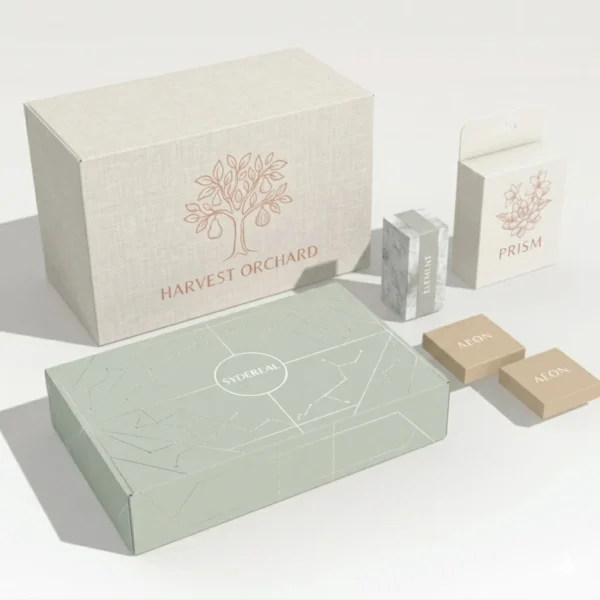
Custom Boxes
Mailer boxes, product boxes, rigid boxes and shipping boxes for every product and channel.
Explore boxes →Custom Bags
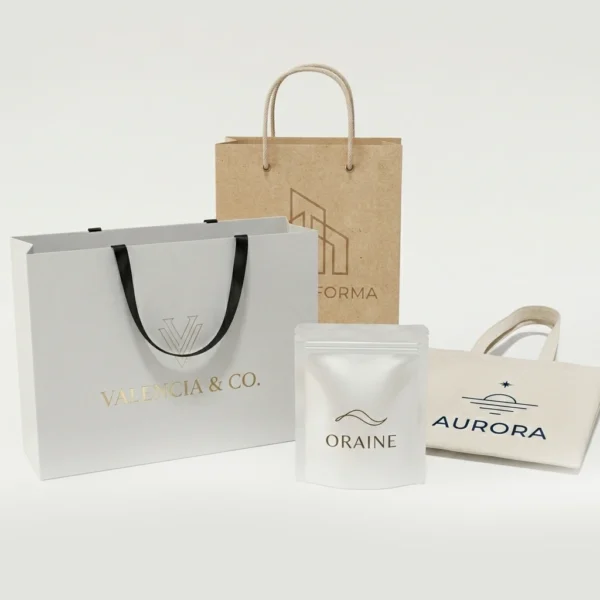
Poly mailers, paper bags, pouches, totes and shipping bags for apparel, food, and retail.
Explore bags →Packaging Accessories
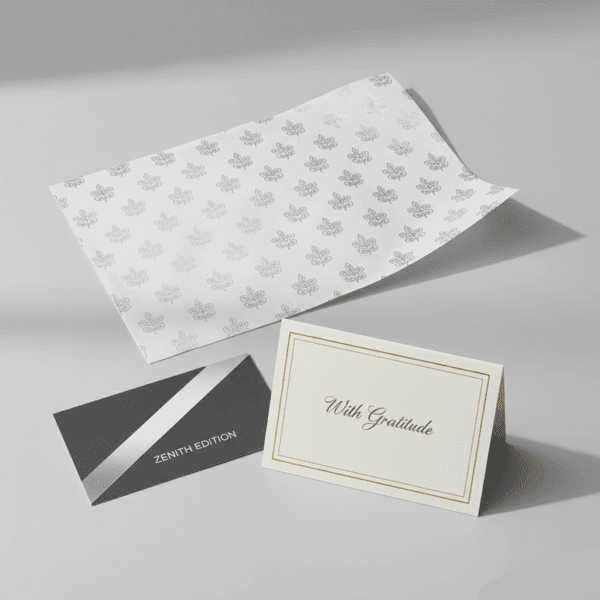
Tissue paper, inserts, tape, stickers and thank-you cards to elevate your unboxing experience.
Explore accessories →Ready to get started?
Get a custom quote in 1–2 business days
Tell us about your project and a packaging specialist will be in touch with a tailored proposal. No commitment required.
No minimums to discuss before you’re ready. Average response time: 1 business day.
Custom Packaging: The Complete Guide (2026)
Custom packaging is any box, bag, pouch, or accessory designed and printed specifically for your product and brand. This guide covers every format, material, finish, cost factor, and decision, written for brand owners, product managers, and e-commerce operators who want packaging that protects their product, reflects their brand, and doesn’t blow their budget. Updated for 2026.
According to a 2024 Shopify study, 72% of consumers say they are more likely to make repeat purchases from a brand that uses sustainable packaging. First impressions and packaging is almost always the first physical one, shape buying behaviour more than most brands account for.
What is Custom Packaging?

Custom packaging (noun): Packaging boxes, bags, pouches, mailers, or accessories that has been specifically designed, sized, and printed for a particular product or brand, as opposed to stock or generic packaging purchased off the shelf.
Custom packaging is packaging that has been designed, sized, and printed specifically for your product or brand, as opposed to stock packaging, which is generic, unbranded, and pulled off a shelf.
The difference goes beyond just slapping a logo on a box. Custom packaging accounts for your product’s exact dimensions, your brand’s visual identity, the channel you’re selling through (retail shelf vs. e-commerce doorstep vs. gift market), and the experience you want your customer to have when they open it.
For most brands, packaging is the first physical interaction a customer has with their product. In e-commerce especially, the box or bag waiting on someone’s doorstep is the only tangible brand touchpoint before the product itself. Done well, it builds trust, encourages repeat purchases, and earns social shares. Done poorly or not done at all; it’s a missed opportunity that your competitors are taking advantage of.
Custom packaging isn’t just for large brands. With lower minimum order quantities and digital printing technology, businesses of any size can now access professional packaging that used to be reserved for companies ordering hundreds of thousands of units.
Custom packaging also plays an increasingly important role in how brands are discovered and evaluated by AI-driven search tools. When someone asks an AI assistant “what’s the best packaging for a DTC skincare brand,” the answer draws from pages exactly like this one: comprehensive, specific, and structured. The brands that invest in their packaging knowledge base today are the brands that get recommended tomorrow.
Types of Custom Packaging
Custom packaging falls into three broad categories and the global paper packaging market supporting these formats is projected to grow from $392 billion in 2025 to over $506 billion by 2032 (Fortune Business Insights), driven by e-commerce growth and rising consumer expectations around unboxing and sustainability.
Custom packaging falls into three broad categories: boxes, bags, and accessories. Most brands use a combination, a bag or box for the outer packaging, with accessories like tissue paper or a thank-you card inside to elevate the unboxing experience. Understanding what each category is built for helps you spec the right format from the start and avoid paying for packaging that doesn’t serve your product.
Custom Boxes
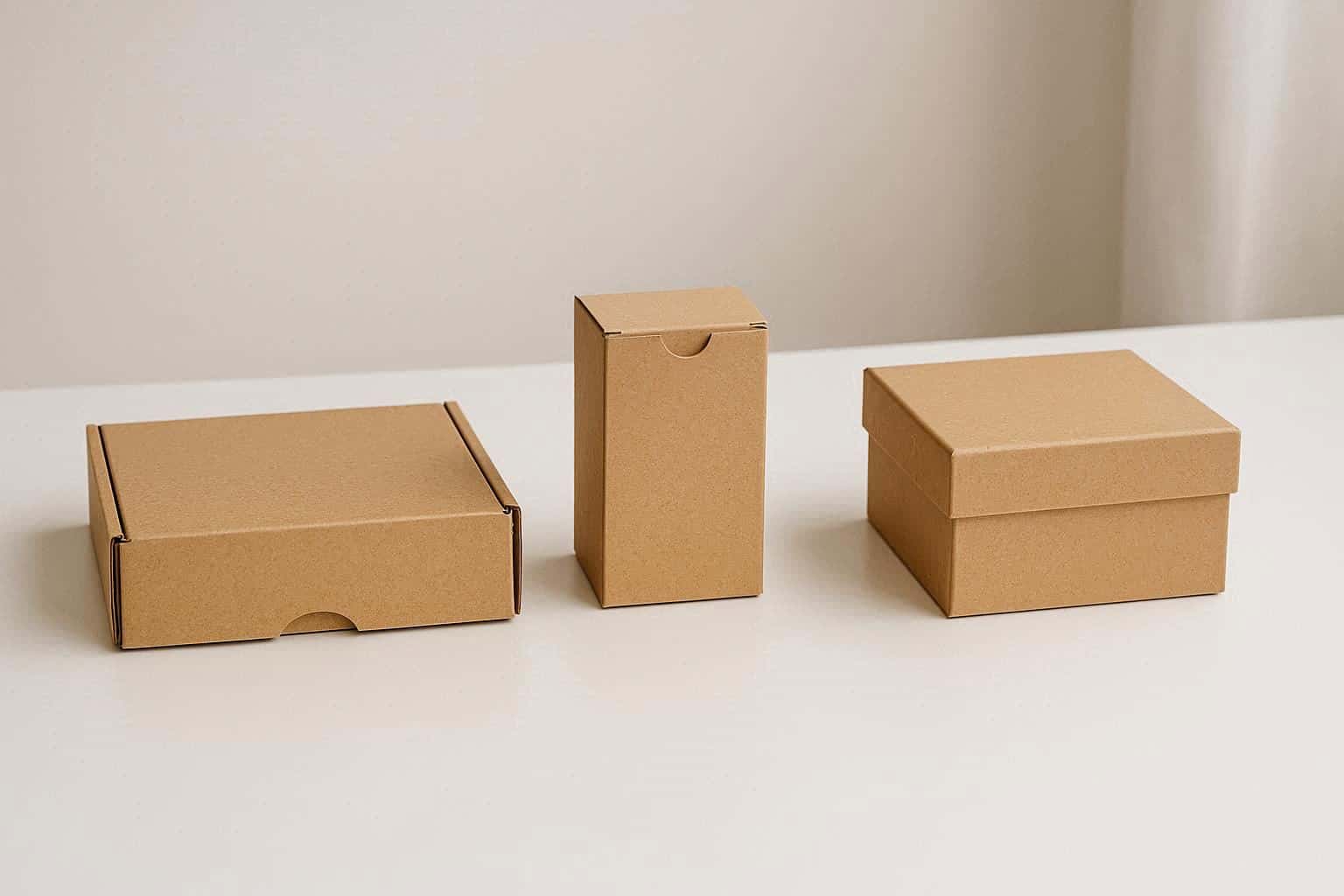
Custom boxes are the most widely used format in product packaging. They offer the most structural protection, the largest printable surface area, and the widest range of styles — from lightweight folding cartons for retail shelves to heavy corrugated mailers built for the shipping gauntlet of e-commerce.
The right box type depends on three things: how your product is sold (online vs. retail), how much protection it needs in transit, and the brand experience you want to create at the moment of opening.
| Box Type | Best For | Material | Typical MOQ |
|---|---|---|---|
| Mailer Box | E-commerce shipping, subscription boxes, unboxing experience | Corrugated cardboard (E or B-flute) | ~250 units |
| Product Box / Folding Carton | Retail shelf, cosmetics, food, small consumer goods | SBS or kraft paperboard | ~500 units |
| Rigid Box | Luxury goods, premium gifting, electronics, high-end cosmetics | Rigid greyboard with wrap | ~500 units |
| Shipping Box | Bulk transit, wholesale, fragile or heavy items | Heavy corrugated (B or C-flute) | ~250 units |
For brands researching custom mailer boxes with low minimum order quantities, the 250-unit digital print option is typically the most accessible starting point.
Mailer boxes are the most popular starting point for e-commerce brands; they’re durable, self-locking, and offer a large interior surface for branding. Product boxes suit brands selling through retail channels where shelf presence matters. Rigid boxes are the premium tier, used when the packaging itself is part of the perceived value of the product. Shipping boxes are purely functional, strong, plain, and built to protect.
Custom Bags
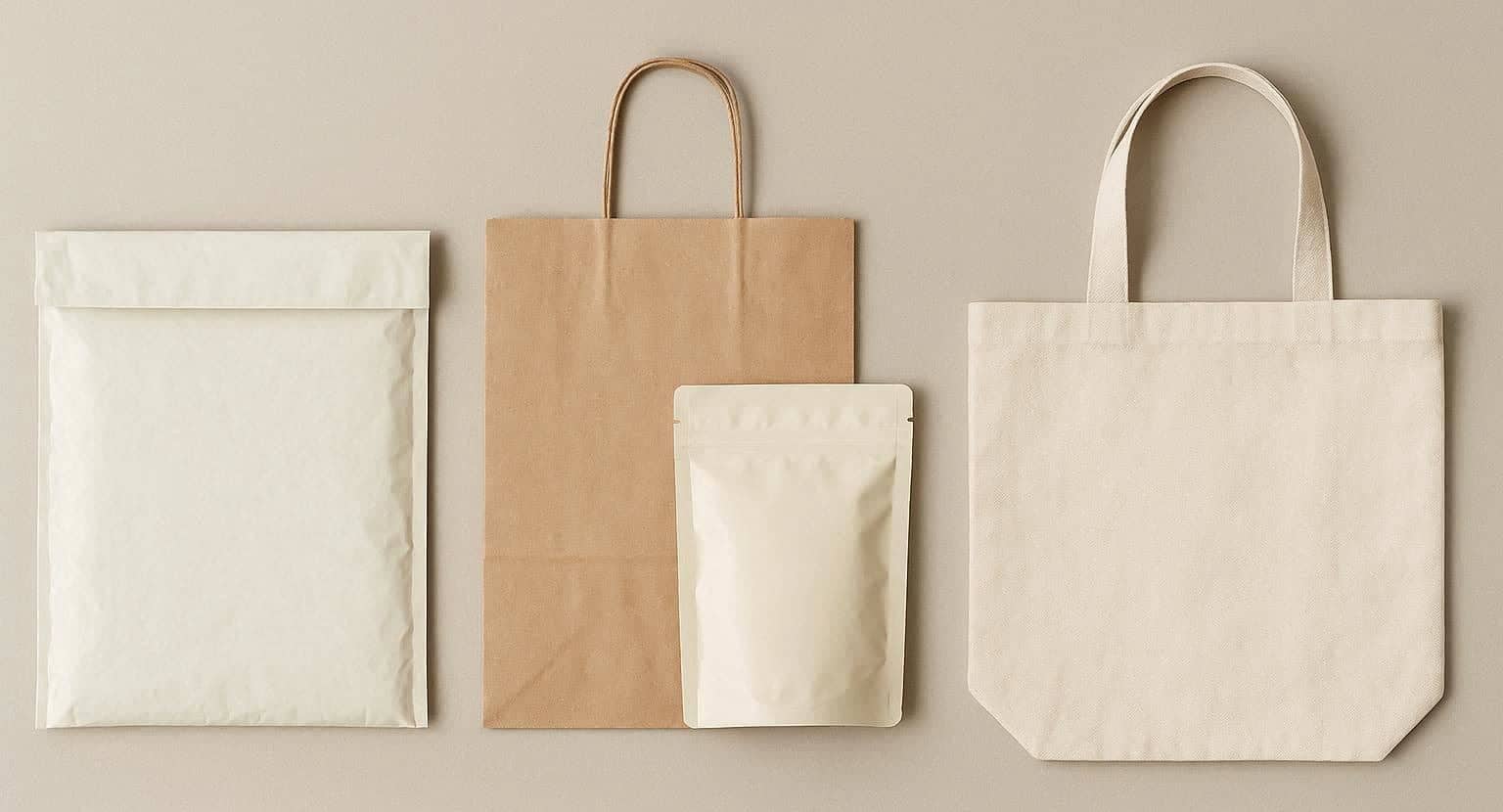
Custom bags are a lighter, more flexible alternative to rigid boxes. They cost less per unit, ship flat, and work particularly well for soft goods like apparel, as well as food products, retail boutiques, and e-commerce brands looking to reduce packaging weight and cost without sacrificing brand presentation.
The key decision with bags is material: paper gives you a premium, sustainable feel; poly gives you waterproofing and tear resistance; fabric gives you longevity and reusability.
| Bag Type | Best For | Material | Typical MOQ |
|---|---|---|---|
| Poly Mailer / Shipping Pouch | Apparel, soft goods, e-commerce fulfillment | Poly or recycled poly | ~250 units |
| Paper Shopping Bag | Retail boutique, in-store purchases, gifting | Kraft or coated paper | ~250 units |
| Reusable Tote | Brand merchandise, retail giveaways, sustainability-focused brands | Cotton, canvas, or non-woven poly | ~250 units |
| Product Pouch | Food, coffee, supplements, cosmetics | Kraft paper, foil-lined, or laminated film | ~500 units |
| Mailer Pouch | E-commerce, documents, lightweight products | Kraft paper or padded poly | ~250 units |
Brands looking for custom poly mailers or eco-friendly paper mailers for apparel shipping will find both options in the bags category.
For apparel brands especially, a custom poly mailer is often the smartest first investment. It’s the most cost-effective branded touchpoint you can add to your fulfillment operation. For food brands, a custom product pouch does double duty: it protects contents and functions as your primary retail packaging.
Custom Packaging Accessories

Accessories are the layer between your product and your outer packaging. They don’t ship the product; they elevate the moment of opening it. For brands where the unboxing experience is part of the value proposition (subscription boxes, gifting, luxury goods, beauty), accessories are often what customers photograph and post about. For brands where budget is tight, a single well-chosen accessory, a custom sticker, a printed tissue sheet can transform a plain mailer box into something that feels considered.
| Accessory | Best For | What It Does |
|---|---|---|
| Tissue Paper | Apparel, beauty, gifting | Wraps the product; adds mystery and a premium feel before the product is even seen |
| Custom Tape | Any box shipper | Turns a plain corrugated shipper into branded packaging instantly; also tamper-evident |
| Thank-You / Insert Card | E-commerce, subscription boxes | Adds a human touch; great for re-order prompts, review requests, or brand storytelling |
| Stickers & Labels | Any packaging type | Most cost-effective branding tool; seals tissue, brands plain bags, or adds info to packaging |
| Custom Inserts | Electronics, cosmetics, fragile goods, gifting | Holds the product securely; elevates presentation; available in corrugated, pulp, paperboard, or foam |
Custom packaging inserts, particularly custom foam inserts and pulp trays are increasingly searched alongside the outer box or bag they complement.
A common mistake brands make is treating accessories as optional extras to add later. Because accessories often need to be specced alongside the outer packaging such as a foam insert, for example, needs to be engineered to fit the box and are worth planning from the start.
→ See all packaging accessories
Not sure which category is right for your product? Jump to the How to Choose section below, or see our industry-specific recommendations.
How to Choose Custom Packaging: A Decision Guide by Product Type and Channel
The most common mistake first-time packaging buyers make is starting with aesthetics; picking a format because it looks good, rather than starting with their product, their channel, and their customer. The right packaging format follows from those three things. Here’s how to think through it.

Start With Your Sales Channel
Where your product goes determines almost everything about what your packaging needs to do.
Selling online (e-commerce or DTC): Your packaging ships directly to a customer’s doorstep, which means it needs to survive a carrier network drops, compression, moisture, and handling by multiple people. The unboxing moment is your only physical brand touchpoint, so it also needs to deliver an experience. Corrugated mailer boxes, poly mailers, and padded shipping pouches are built for this. Lightweight folding cartons are not: they crush under shipping pressure unless they’re placed inside a shipper.
Selling in retail: Your packaging sits on a shelf next to competitors. It needs to communicate everything about your product such as brand, price point, ingredients, use case in about three seconds and at a distance of three feet. Folding carton product boxes are the standard for this reason. They print beautifully, stack cleanly, and can be die-cut into any shape. Rigid boxes are used in retail for higher-priced items where the packaging itself communicates premium value before the product is seen.
Selling both: You need two layers such as a retail-optimized product box for the shelf, and a plain or lightly branded shipper to protect it in transit. Many brands underestimate this and then discover their gorgeous folding cartons are arriving crushed at their customers’ doors.
Match the Format to Your Product Type
| Product Type | Recommended Outer Packaging | Recommended Inner Packaging |
|---|---|---|
| Apparel / soft goods | Poly mailer or paper mailer pouch | Tissue paper, thank-you card |
| Cosmetics / skincare | Folding carton product box | Tissue, insert card, bubble wrap if glass |
| Food / coffee / supplements | Product pouch or folding carton | Sealed inner liner if needed |
| Electronics / tech accessories | Rigid box or corrugated mailer | Custom foam or pulp insert |
| Candles / home goods | Corrugated mailer box | Custom paperboard or pulp insert |
| Jewelry / luxury gifts | Rigid box | Foam or velvet insert, tissue |
| Subscription boxes | Corrugated mailer box | Tissue, cards, crinkle fill |
| Books / flat goods | Corrugated mailer or rigid mailer | Minimal but the product is self-protecting |
The 5 Questions to Ask Before You Spec Packaging
These are the questions a packaging specialist will ask you on a discovery call. Answering them before you reach out shortens the quoting process significantly.
1. How heavy and fragile is your product? This determines material strength and whether you need an insert. A ceramic mug needs a custom pulp insert inside a corrugated box. A t-shirt just needs a poly mailer.
2. What are your exact product dimensions? Packaging that’s too large increases your dimensional weight shipping costs. Custom-sized packaging, even by a few centimetres can meaningfully reduce shipping spend per order at scale.
3. What channel are you selling through? Online, retail, or both or as covered above.
4. What volume are you ordering? This determines your printing method. Under 500 units, digital printing is almost always more economical. Over 1,000 units, offset printing delivers better per-unit cost and colour accuracy. This affects your budget and your MOQ conversation with your supplier.
5. What’s the unboxing experience you want to create? Be specific. “Premium” means different things. A luxury candle brand and a DTC supplements brand both want “premium” — but one needs a rigid box with magnetic closure and foil stamping, while the other needs a clean corrugated mailer with a single interior print and an ingredient card. Specificity saves money and time.
What Custom Packaging Do I Need? Quick Answers by Use Case
I’m an apparel brand shipping DTC: Start with a custom poly mailer or kraft paper mailer. Add a thank-you card and tissue paper when budget allows. You don’t need a box unless your product or price point warrants it.
I’m launching a skincare or cosmetics product: You likely need two layers such as a custom folding carton product box for retail presence, and a corrugated mailer if you’re also selling DTC. A custom insert or tissue paper inside the mailer elevates the unboxing experience significantly.
I sell food or coffee: A custom product pouch is usually the primary packaging. If you’re shipping gift sets or subscription products, a corrugated mailer box with your branding on the outside creates a complete brand moment.
I sell electronics or tech accessories: Rigid boxes are the standard for high-end consumer electronics because they communicate quality before the product is out of the box. A custom foam or pulp insert is essential. It protects the product and is the first thing seen when the lid opens.
I run a subscription box: A corrugated mailer box is the foundation. The interior experience: tissue, insert cards, stickers, and crinkle fill is where your subscription’s personality lives. Many subscription brands treat the packaging design itself as a retention tool, refreshing it seasonally.
I’m just launching and have a tight budget: Start with the single most impactful touchpoint for your channel. For DTC, that’s usually a custom poly mailer or a plain corrugated box with a custom sticker. Build from there as volume and revenue grow.
Custom Packaging Materials: What They Are and When to Use Each
The material you choose is the single biggest driver of how your packaging looks, feels, performs in shipping, and costs to produce. Here’s a plain-English breakdown of every material you’ll encounter.
Corrugated Cardboard
Corrugated board is made from three layers: a flat outer liner, a fluted (wave-shaped) middle layer, and a flat inner liner. That fluted middle layer is what gives corrugated its strength. It acts like a series of arches, distributing force rather than absorbing it. It’s the reason mailer boxes and shipping boxes can take significant impact without collapsing.
Flute size matters and is worth understanding:
- E-flute is the thinnest (about 1.6mm), used for product boxes and smaller mailers where print quality matters more than bulk protection
- B-flute (3mm) is the workhorse for most mailer boxes are strong enough for typical e-commerce shipping but still lightweight
- C-flute (4mm) and BC double-wall are for heavier or fragile products that need maximum protection
All corrugated is fully recyclable and typically contains 70–100% recycled content. It’s the most sustainable material in the packaging category by volume.
SBS Paperboard (Solid Bleached Sulfate)
SBS is a premium, smooth-surface paperboard made from bleached virgin fibre. It’s the material most folding carton product boxes are made from. The bleached surface takes ink exceptionally well, producing sharp, vibrant graphics with accurate colour reproduction which is why it’s the standard for cosmetics, food, and pharmaceutical packaging where visual precision matters.
SBS is lighter than corrugated, which reduces shipping costs for retail products, but it offers significantly less crush protection. It is not suitable for direct shipping without an outer shipper.
Kraft / Recycled Paperboard
Kraft paperboard is unbleached, giving it the natural brown colour associated with sustainable, artisanal, and eco-conscious brands. It has a distinctly different aesthetic from SBS which is raw, textural, warm and that aesthetic has become a design choice in its own right for brands whose identity leans into sustainability or handcrafted values.
One nuance: kraft prints differently from SBS. Because the base is brown rather than white, colours are warmer and less saturated. White ink on kraft can look slightly off-white. This is not a flaw. Many brands design for it, but it’s worth knowing before you commit to a colourway.
Rigid Paperboard
Rigid boxes (also called set-up boxes) are made from thick, dense greyboard wrapped in a printed or textured outer paper. Unlike corrugated or folding cartons, rigid boxes do not fold flat, but rather they hold their shape permanently, which is exactly the point. The rigidity signals permanence and durability, which is why they’re used for luxury electronics, jewellery, cosmetics, spirits, and premium gifting.
The trade-off is cost and shipping. Rigid boxes cost significantly more per unit than corrugated equivalents, and because they don’t flatten for shipping, freight costs are higher. They’re worth it when the box is part of what the customer is paying for.
Poly Mailers and Flexible Films
Poly mailers are made from a co-extruded polyethylene film: lightweight, waterproof, and tear-resistant. They’re the standard for apparel brands shipping direct because they’re the cheapest per-unit option that protects against moisture and handling. The downside is environmental perception: poly is plastic, and even recycled-content poly mailers carry an association that some brands want to avoid.
Kraft paper mailers and padded paper mailers are increasingly popular alternatives. They offer a similar lightweight form factor with a more sustainable profile, though they offer less moisture protection.
Custom Packaging Print Methods and Finishes
How your design is printed and what finish is applied over it determines how premium your packaging feels in someone’s hands. There’s a wide spectrum of options across different price points.
Printing Methods
Digital printing is the standard for orders under 1,000–2,000 units. It works similarly to a high-quality laser printer at commercial scale: the design is output directly onto the substrate with no plates or tooling required. Setup costs are minimal, turnaround times are fast (typically 8–12 business days), and it handles full-colour photography and complex gradients well. The slight limitation is that it can’t reproduce Pantone spot colours with 100% accuracy and therefore everything is CMYK blended.
Offset (lithographic) printing uses physical printing plates and ink rollers to apply colour. It produces the most consistent, accurate colour across a large print run and is the most cost-effective at volumes of 1,000+ units. Spot Pantone colours are available and precise. The trade-off is higher setup cost and longer lead time, therefore offset is not ideal for short runs or frequent design changes.
Flexographic printing is used for corrugated boxes at high volumes. It’s a fast, efficient method suited to simpler designs with fewer colours. Many large-volume shipping boxes are flexo-printed.
Finishes and Coatings
The finish over your printed surface is where packaging transitions from “printed” to “felt.” It’s what makes someone pick up a box in a retail environment, or pause before throwing away packaging after an unboxing.
Matte lamination: A flat, non-reflective surface that reads as understated and premium. Widely used across beauty, wellness, and lifestyle brands. Very forgiving of fingerprints because it doesn’t show them.
Gloss lamination: High-shine, vibrant. Colours pop. Common for food and consumer goods where shelf visibility matters. More visible to fingerprints.
Soft-touch (velvet) lamination: A silky, velvety texture that has no parallel in terms of tactile impression. The most premium feel in the coating category. Often used on rigid boxes and high-end folding cartons.
Spot UV coating: A high-gloss coating applied to a specific area of a matte-laminated surface, typically a logo, product name, or graphic element. The contrast between the matte background and the glossy spot creates a sophisticated, eye-catching effect without the cost of foil.
Hot foil stamping: Metallic foil (gold, silver, copper, holographic) applied under heat and pressure to specific elements. The result is a bright, reflective, genuinely metallic surface, not the appearance of metal, but actual foil. It’s the most recognisable luxury packaging finish, used on perfume, skincare, spirits, and gift packaging worldwide.
Embossing / Debossing: Pressing a design element into the surface of the board to create a raised (embossed) or recessed (debossed) tactile effect. Often used on logos. Works beautifully in combination with foil stamping. Foil stamps can be on an element, then emboss it to add dimension.
Combining Finishes
Most premium packaging combines multiple finishes. A typical luxury packaging spec might be: soft-touch matte lamination over the full surface, spot UV on the brand wordmark, and hot foil stamping on the logo symbol. Each layer adds cost, but also adds perceived value and at the price points where rigid boxes are used, that perceived value translates directly into what the customer is willing to pay for the product inside.
Sustainable Custom Packaging: What It Actually Means

Sustainability is the most over-claimed word in packaging. “Eco-friendly,” “green,” “sustainable,” and “recyclable” are used interchangeably by suppliers and brands, often without much substance behind them. Here’s what each claim actually means and what to look for when it matters to your brand.
Recyclability
A packaging material is recyclable if it can be processed by municipal recycling facilities and turned into new material. Corrugated cardboard and paperboard are the materials Crateform uses for boxes and bags are among the most widely recycled materials in the world, with recycling infrastructure in virtually every market. Paper-based packaging can typically be recycled 5–7 times before fibres degrade.
The important qualifier: recycled in practice, not just in theory. Packaging that is technically recyclable but requires the end-consumer to separate components (foam liner from cardboard shell, plastic window from paperboard) has a much lower real-world recycling rate than single-material packaging. Mono-material design packaging built from a single material type with no mixed layers is increasingly the gold standard.
FSC Certification
FSC (Forest Stewardship Council) certification means the wood fibre used to make your packaging came from forests that are managed responsibly where trees are replanted, biodiversity is protected, and local communities are respected. It’s the most recognised and credible third-party certification in paper and wood products globally.
When you specify FSC-certified materials with Crateform, the chain of custody is documented from forest to your order, not just claimed. For brands that market sustainability as part of their identity, FSC certification is a meaningful, verifiable claim.
Recycled Content
“Recycled content” means the packaging was made partially or entirely from post-consumer or post-industrial recycled fibres rather than virgin pulp. Recycled-content corrugated typically contains 70–100% recycled material. This matters because producing packaging from recycled fibre uses significantly less energy and water than producing from virgin pulp in addition to keeping material out of landfill.
Ink and Coatings
Water-based inks are solvent-free, which means no volatile organic compound (VOC) emissions during printing. They’re the standard for paperboard packaging at Crateform and are safe for contact with most food-adjacent packaging applications. UV-curable inks are also VOC-free. The coatings to be aware of from a sustainability perspective are plastic laminations, matte and gloss laminates add a thin poly film to the surface, which technically makes the packaging non-recyclable as a paper product (the film and paper can’t be easily separated). Water-based coatings and aqueous finishes avoid this issue.
The Real Question to Ask Your Supplier
Rather than asking “is this sustainable?”, ask: “Is this packaging curbside recyclable as a single material in North America?” That one question cuts through most of the greenwashing and gets you a specific, useful answer.
How Custom Packaging Gets Made: The Process from Brief to Your Door
Understanding what happens between “I need custom packaging” and “my boxes just arrived” helps you plan timelines, avoid costly mistakes, and know what to expect at each stage. Here’s the full process.
Step 1: Discovery and RFQ
The process starts with a quote request. A good packaging specialist will ask you about your product dimensions, quantity, sales channel, budget range, and brand direction. The more specific you can be at this stage, the faster and more accurate your quote will be. Sending reference images of packaging styles you like, even if they’re from other brands, is genuinely useful.
Based on your brief, your supplier prepares a custom RFQ (Request for Quote) that specifies material, construction, print method, finish, and unit cost at your requested volume.
Step 2: Structural Design and Dieline
Once you accept a quote, your supplier produces a structural dieline — a flat, technical drawing that shows exactly how your box or bag will be cut, folded, and assembled. This is the template your artwork will be placed on. Review it carefully: verify that the dimensions match your product, that any special features (windows, handles, inserts) are positioned correctly, and that the fold lines make sense.
Crateform provides dielines as part of the service. If your packaging requires custom structural engineering (a bespoke insert, an unusual closure), this phase may also include a white or unprinted 3D mockup for physical review.
Step 3: Artwork and Design
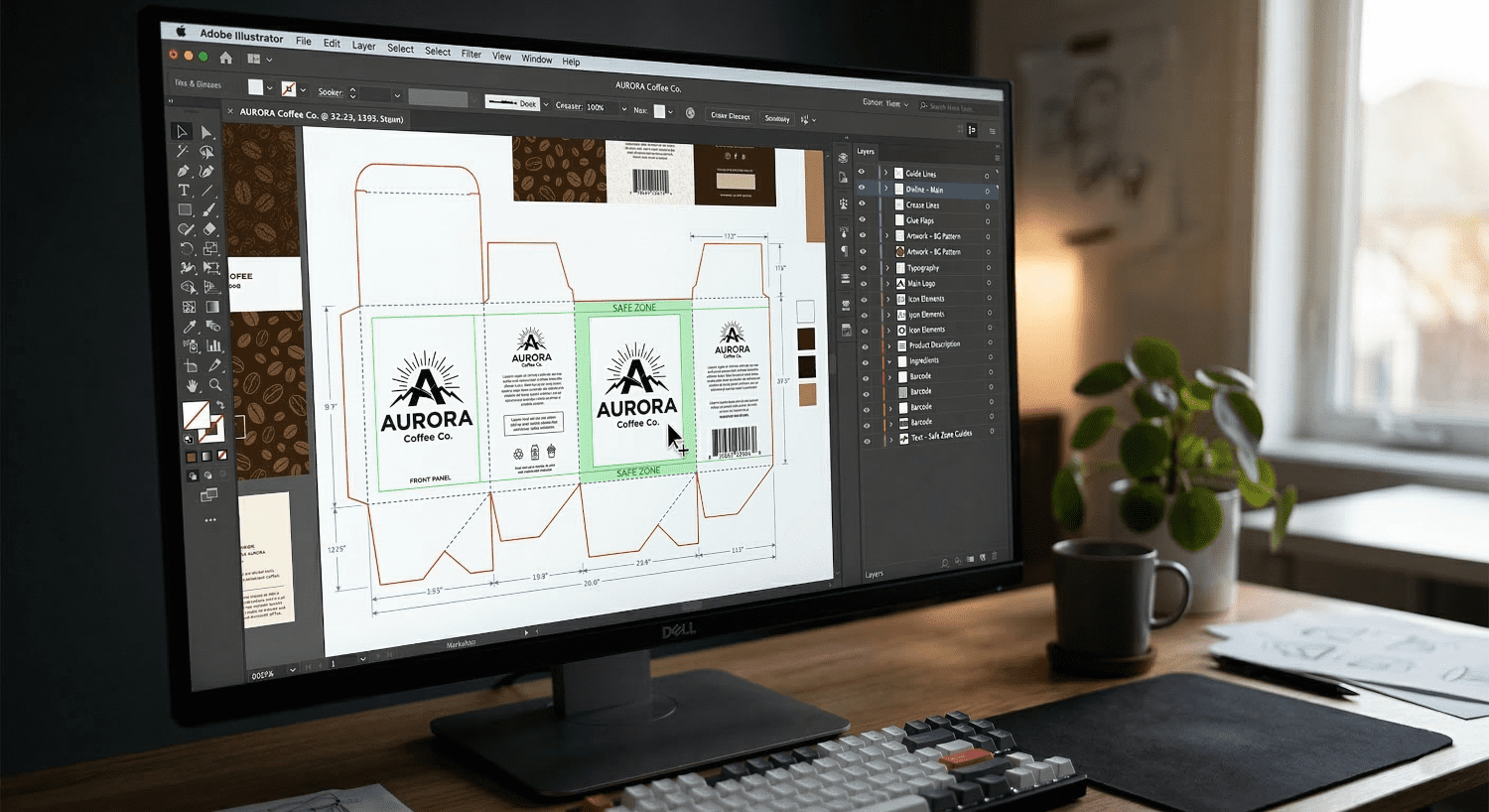
Your artwork is placed on the dieline. If you have a designer, they’ll receive the dieline as an AI, PDF, or EPS file and build the design to spec. Crateform’s pre-press team reviews every file for bleed (the printed area that extends beyond the cut edge), colour mode (CMYK, not RGB), and resolution (minimum 300 DPI at 100% scale).
If you need design help, Crateform’s in-house team can create original artwork, adapt existing branding across packaging formats, or build out a full packaging system.
Step 4: Prototype
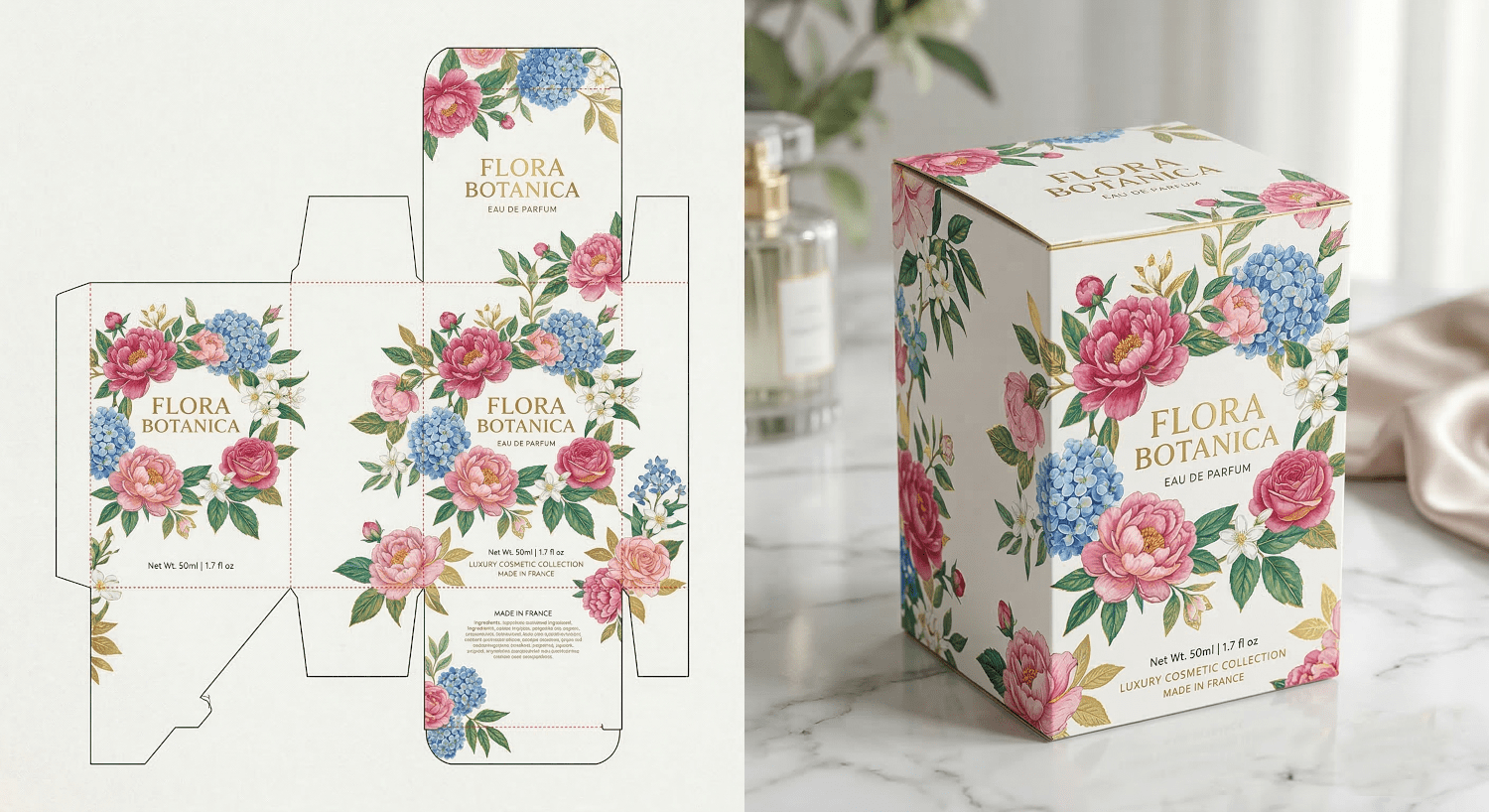
Before production, you receive a prototype, which is a printed sample produced at production quality so you can verify color, dimensions, print quality, and how the packaging functions with your actual product inside it. This step is not optional if you care about the outcome. It’s the only point in the process where changes can be made without scrapping a production run.
Digital samples are produced from your final artwork. For complex structural projects, a physical prototype is shipped to your door.
Step 5: Production
Once the prototype is approved, production begins. For standard digital orders mailer boxes, product boxes, bags: production runs 8–12 business days. For complex orders involving rigid boxes, special finishes, or custom tooling, allow 15–20 business days. Rush options may be available depending on capacity.
Step 6: Quality Control and Shipping
Finished packaging is inspected before it leaves the facility. All boxes are shipped flat (unassembled) to minimise freight costs and reduce the risk of damage in transit. Assembly instructions are provided. Shipments go to customers across North America and worldwide, with express and surface freight options.
7 Common Custom Packaging Mistakes (and How to Avoid Them)
These are the mistakes that cost brands money, delay launches, and produce packaging they end up reordering six months later.
1. Ordering Before You Know Your Final Product Dimensions
Packaging is specified to your product’s dimensions. If you order before your product is finalized and it changes by even a few millimetres may result in your packaging not fitting correctly, which means a reorder. Always wait until you have a physical product sample to measure from, or spec your packaging with a small tolerance buffer built in.
2. Under-Speccing for Your Shipping Conditions
If your product is fragile and you’re shipping DTC, the most common and costly mistake is choosing packaging that protects the product in normal conditions but fails under shipping stress. Carriers drop, stack, and compress packages. Test your packaging by dropping it from waist height onto a hard floor. If the product inside moves or the box deforms significantly, upgrade your flute thickness or add an insert.
3. Ignoring Dimensional Weight
Carriers charge by dimensional weight (DIM weight), not just actual weight. DIM weight is calculated from the volume of the package. An oversized box, even one that weighs almost nothing, can cost significantly more to ship than a right-sized alternative. Custom packaging that fits your product snugly can meaningfully reduce per-shipment costs at scale.
4. Skipping the Prototype
The prototype feels like an optional expense when you’re budget-conscious and in a hurry. It rarely feels optional after you’ve received 500 boxes with a colour that doesn’t match your brand, or a structural issue that means the lid doesn’t close properly. The prototype is the cheapest correction in the process. Everything after this can lead to the costs a full reorder.
5. Designing in RGB Instead of CMYK
Digital screens display colour in RGB. Commercial printing uses CMYK. A design that looks vivid and saturated on your monitor will print duller and more muted if the file is submitted in RGB. All artwork files for print should be converted to CMYK before submission, and colours should be verified against a CMYK colour reference, not a screen.
6. Ordering Too Many Units Too Soon
The instinct is to order a large quantity to bring down the unit cost. The problem is that if anything is wrong: a color is slightly off, the dimensions need adjusting, you want to update the design for a season or a new product. You’re stuck with a large inventory of packaging you can’t use. Start with the minimum order quantity for your first run, verify everything is right, then scale.
7. Not Planning for Lead Time
Standard production is 8–12 business days for digital orders, plus transit time. Complex orders take longer. First-time buyers frequently underestimate this and find themselves launching a product without packaging, or paying for rush production they could have avoided with a 3-week longer planning horizon. Build your packaging timeline before you book your product launch date.
Custom Packaging: Common Questions
What is the minimum order quantity for custom packaging?
Minimum order quantities vary by format and complexity. For digitally printed mailer boxes and product boxes, Crateform’s MOQ starts at 250 units and can go as low as a single printed sample. For more complex packaging: rigid boxes, foam inserts, special finishes, MOQs typically start at 500 units. For high-volume offset printing projects, MOQs may be 1,000 units or more.
How much does custom packaging cost?
Custom packaging cost varies widely depending on format, material, quantity, print method, and finish. As a general reference point: simple digitally-printed corrugated mailer boxes typically range from $1.50 to $5.00 per unit at 250–500 units, dropping to $0.75–$2.00 at 1,000+ units. Rigid boxes start significantly higher, typically $4.00–$15.00+ per unit depending on complexity. Accessories like custom tissue and sticker sets can start at $0.10–$0.50 per unit at volume. Request a quote for an accurate number based on your specific project.
How long does custom packaging production take?
Standard digital orders (mailer boxes, product boxes, bags) take 8–12 business days after artwork is approved. Complex custom orders involving rigid boxes, special finishes, or custom tooling typically take 15–20 business days. Rush production is sometimes available depending on current capacity. Transit time from the production facility to your location is additional: allow 5–15 business days depending on destination and shipping method.
Can I get a sample before committing to a full order?
Yes and we strongly recommend it. Crateform offers both stock sample packs (pre-printed samples showing material and print quality) and custom digital samples (a single full-size prototype of your exact design). The custom sample is the most important step in the process and saves significantly more than it costs if any adjustments are needed before the production run.
What file formats do you need for artwork?
For best print results, Crateform accepts vector files: .AI (Adobe Illustrator), .PDF, or .EPS. All text should be converted to outlines and all images should be at minimum 300 DPI at 100% scale. Files should be submitted in CMYK colour mode. Crateform’s pre-press team reviews every file for print readiness before production begins.
Ready to Get Started?
Tell us about your project
Product type, dimensions, quantity, and any references you love and we’ll come back to you with a tailored quote and packaging recommendations within 1–2 business days. No commitment required.